Since it was launched in April 2023, World Boxing has made the delivery of competitive sporting integrity one of its central pledges to the global boxing community. This article takes a behind the scenes look at the work it is doing in this area, and the processes and practices it has put it in place to help deliver sporting integrity.
Just over two years ago, World Boxing held its first ever global championship, when more than 180 boxers from 30 National Federations took part in the U19 World Boxing Championships at the Pueblo Convention Center in Colorado, USA.
Hosting its first global championships was a momentous occasion for a nascent International Federation (IF) and since then World Boxing’s competition calendar has gone from strength to strength.
In September 2025 more than 540 boxers from 60 countries took part in the inaugural World Boxing Championships in Liverpool and recently it staged the second U19 World Boxing Championships in Budva, Montenegro. The World Boxing Cup series is in its third year, and the 2026 finals get underway in Tashkent on 26 November 2026.
The quality and management of World Boxing’s competitions has been a significant factor in its ongoing progress and was an important consideration in the International Olympic Committee’s (IOC) decision to provisionally recognise it as the IF for boxing and task it with managing the qualification system and the boxing competition at the Los Angeles 2028 Olympic Games (LA28).
At the centre of this, is the issue of sporting integrity and ever since it was launched in March 2023, World Boxing has made the delivery of competitive fairness one of its central pledges to the global boxing community.
Much of this is in response to the widely publicised issues that affected international boxing under the previous IF and explains why World Boxing has made the delivery of sporting integrity and the principles of transparency, accountability, objectivity and due process, so central to its way of operating.
Responsibility for ensuring this and creating a global sporting structure where boxers from around the world can compete and excel knowing that competition is fair and the integrity of the sport is priority sits with the board and the Secretary General. The operational execution is overseen by World Boxing’s Director of Sports Integrity, David Llaurado.
A former referee and judge who officiated at London 2012, David worked for both the Boxing Task Force and the Paris Boxing Unit that delivered the boxing competitions at Tokyo 2020 and Paris 2024 respectively and was one of the first people employed by World Boxing owing to his unprecedented knowledge and experience in this area.
Llaurado says: “Unlike a sport such as athletics where the person that crosses the finish line first is the winner, boxing is judged and scored, so ensuring it is fair and that we get the right winner is more complicated than some other sports and requires us to create structures and processes that enable us to have confidence in the integrity of the result.”
This is a complex task but broadly speaking there are five key elements to World Boxing’s approach: establishing a pool of suitably qualified eligible officials; clear processes for selecting objective officials for competitions; in-competition management; ongoing evaluation; and education and communications.
Establishing a pool of officials
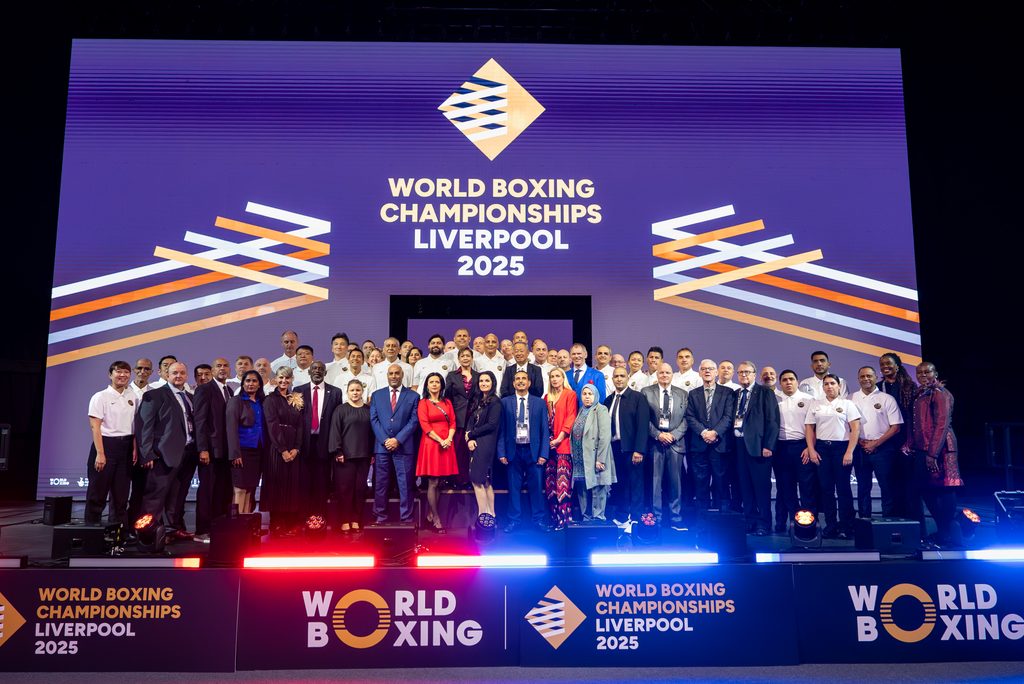
Since it was launched in 2023, World Boxing has built-up a pool of Technical Officials (TO) and Referees and Judges, with expertise and experience of working at international boxing competitions. It has also consulted widely with National Federations on the system around Referees and Judges and regularly takes feedback on ways this can be improved.
Based on their levels of experience, this pool of officials has four levels of certification: International, Inter Continental, Continental and National. World Boxing manages the top three levels and National Federations oversee their own officials. The group of around 200 International officials are the most experienced and these are the only men and women that officiate at major global championships.
Next are Inter Continental Officials who are able to take part in World Boxing Cup events alongside International Officials. Continental Officials are able to work at continental events, international competitions delivered by National Federations and at national level. National officials, work at the two latter events and all have scope to move up the ranks based on experience gained and performances at tournaments.
Officials are evaluated at the end of every tournament and can be relegated if their scores fall below certain thresholds.
Selection for competitions
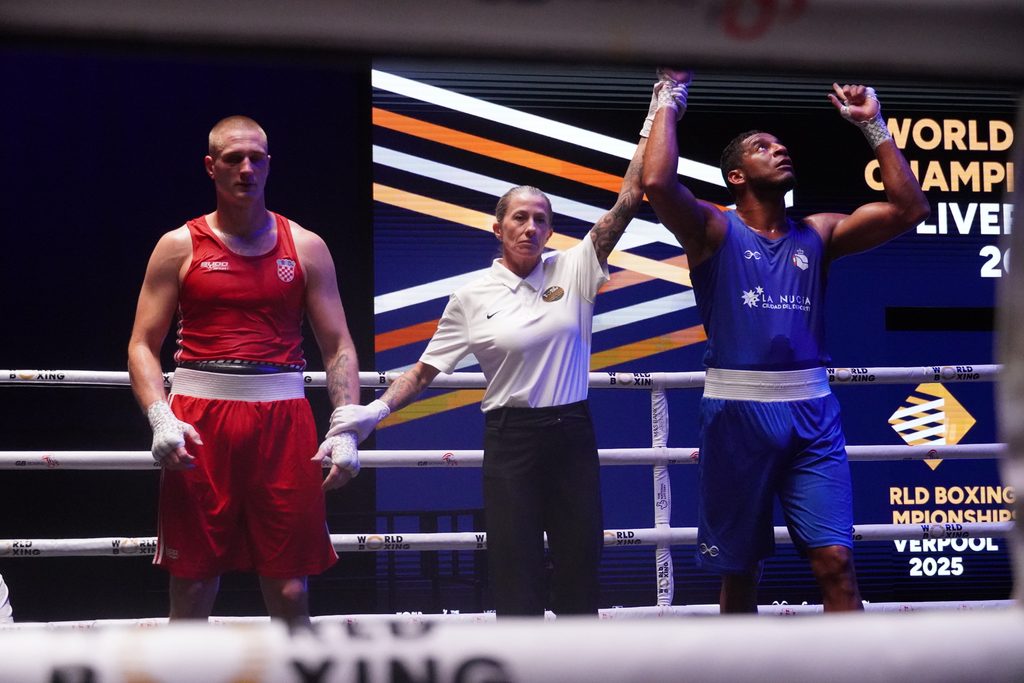
The process for selecting TOs and Referees and Judges to work at World Boxing competitions is similar to the one used at the Tokyo 2020 and Paris 2024 Olympic Games and is based on a randomised selection process, managed in association with World Boxing’s Official Technology Service Provider, Xempower.
All of the eligible individuals are placed in a draw pool which has a series of filters applied to reflect the number of officials required and the quota by country and continent, to ensure balanced representation. Following a randomised electronic draw the officials selected are assigned positions to work at the tournament. Those remaining are designated as reserves and are only appointed if the selected officials decline, withdraw or are unable to participate.
According to Llaurado: “The key point is that the process is objective and randomised. Once the eligible pool has been established and filters applied, the selection process is blind and based solely on the electronic draw.
“It means that when a TO or a Referee is offered a place to work at one of our competitions, it is not because they have been chosen by me or by World Boxing, it is because they possess the relevant skills and experience to be in the eligible pool and have then been selected by a random electronic draw.
“The whole process is transparent and objective and not based on anyone’s preferences or opinions about an individual.”

In-competition management
Prior to any major competition, World Boxing hosts webinars with key officials including the Technical Delegate (TD), the Draw Commissioners and the Referee and Judge evaluators to outline the schedule of the tournament and set out ways of working.
At most World Boxing tournaments there will be two sessions of boxing per day, so ahead of each session a randomised draw will take place, to allocate the Referees and Judges for each bout.
Only the Draw Commissioners, the TD and scoring operator are involved in the process and a series of filters are applied to eliminate conflicts of interest that can cover a large number of factors such as nationality, countries with conflicts or territorial disputes, and other considerations such as second nationality, country of birth or residence, and business relationships.
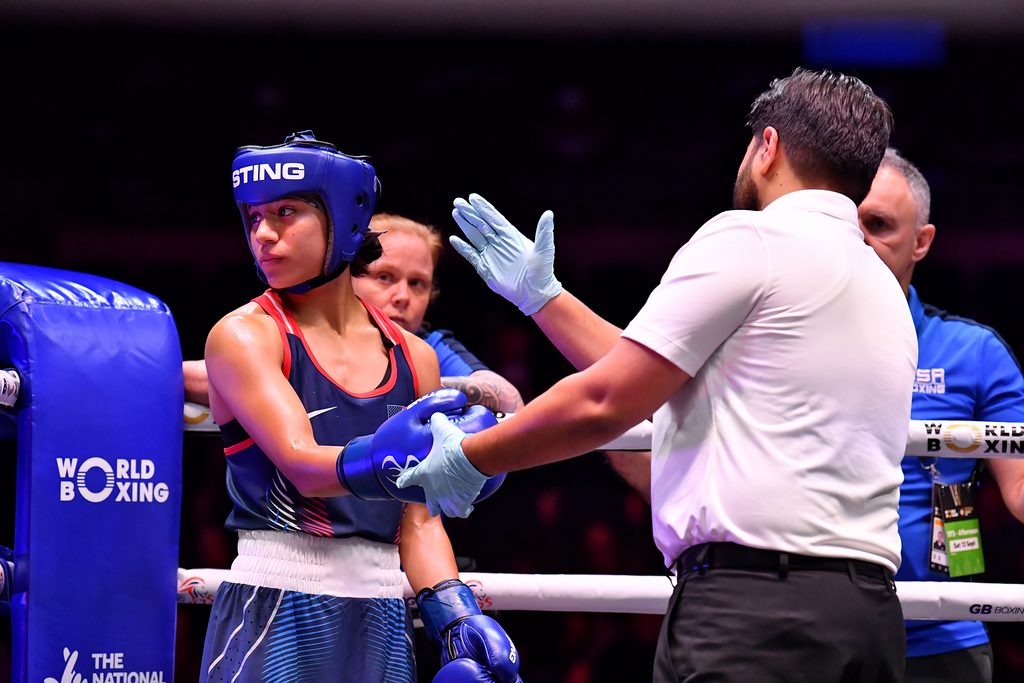
The performance and behaviour of officials is monitored throughout the competition with three evaluators per ring; one to monitor the Referee and two to evaluate the Judges. To ensure they see the bout from different perspectives, one of the Judge evaluators is on the field of play, while the other watches a broadcast feed in a private room.
Evaluation
For every bout, the Judge evaluators are expected to score the round using the 10 points must system. They are also asked to evaluate the extent to which a round can be considered ‘open’ to being scored differently, or if it is ‘obvious’ that one boxer won the round.
The scores of the five ringside Judges plus the input of the two evaluators is fed into an algorithm which provides a definition of the round against which the performance of the Judges can be evaluated.
For example, if three Judges score a round 3-2 in favour of the red corner, yet the evaluators both see it as an ‘obvious’ round for the blue corner, then the three Judges will have their performance marked down and may face a sanction that could result in them being suspended from judging the following day’s sessions.
At the end of each day a series of reports are produced, based on the inputs of the evaluators and using a defined system and technology led process, which indicate if there is a case to sanction any Referees or Judges.
The evaluators may review a bout, based on certain criteria, to validate a potential sanction. These are then shared with the TD and Draw Commissioner in a separate meeting. This information is used by the Draw Commissioner to filter out the Referees and Judges that have underperformed and remove them from the next day’s sessions, or in some cases, the remainder of the competition.
For Referees, there is a wide range of criteria on which they are evaluated, such as whether they have allowed a boxer to take too many punches or been slow to deliver a standing count. Where a requirement to review an evaluation is triggered, either automatically or based on pre-defined criteria, the relevant bouts are re-watched and reviewed by an Oversight Committee consisting of all the evaluators, before the next day’s session to reach a judgement on whether the Referee ought to be sanctioned.
The extent of a sanction depends on the issue but the existence of a clear evaluation process means that in the course of a World Boxing competition, it is probable that some Referees or Judges will be sanctioned, removed from a session and asked to reflect on the feedback from the evaluators.
If a Referee or Judge exceeds certain thresholds they can be removed from further participation in the competition, or a sanctioned referee may only be allowed to continue as a Judge.
In the final stages of each competition, the overall performance scores of the Referees and Judges are evaluated and the bottom 20 per cent removed. Of the remaining 80 per cent, the top 13 remain in the pool as Referees and Judges and the rest are retained as Judges to ensure the best performing officials oversee the finals.
Llaurado explains: “The approach is designed to encourage high levels of technical competence in officiating by having multiple feedback opportunities and ongoing evaluation of performance. The use of sanctions and the relegation system is not intended to act as a punishment but is designed to drive standards and enable officials to reflect, review and acknowledge errors with a view to improving.”
Education and communications
As part of its work to drive standards, World Boxing is developing educational resources and is currently working on a series of workshops and webinars for evaluators who will then go on to deliver courses to Referees and Judges. It is also working with the continental confederations to increase the size of their pools of officials and train-up more Referees and Judges.
Alongside this, the Sport Department has increased its dialogue with National Federations to help heighten their understanding of its systems and processes for delivering sporting integrity. As part of this, representatives from the World Boxing Sport and Integrity team now take part in pre-competition Technical Meetings to outline officiating protocols and provide participating nations with details on the way that that Referees and Judges will be monitored and evaluated during the competition.
“Taking part in Technical Meetings and increasing our dialogue with National Federations is designed to increase the accountability of officials, provide an opportunity for us to explain the way we work and create opportunities for coaches and team officials to ask questions,” explains Llaurado.
“The boxers participate in World Boxing competitions are the best in the world so bouts will often be close. It means there will be times when a coach or boxer will not agree with the result, however we hope that by being open and transparent about the way we work, they will acknowledge that the officials have followed clear and transparent processes and that all of those involved are acting in good faith and doing everything they can to deliver a fair outcome.”
In the quest to deliver competitive fairness, increasing the use of technology is being explored by World Boxing and it is currently piloting a scheme that uses Artificial Intelligence (AI) to support evaluators by providing an additional layer of analysis to help validate the result of bouts.
The testing works alongside the work of the Referee and Judge evaluators and enables AI to look at the metrics used to judge a bout, such as at the volume and quality of scoring punches, and offer a judgement that can be viewed alongside the evaluators view of whether a round should be classified as ‘open’ or ‘obvious’.
If the pilot is successful it may lead to the introduction of a review process whereby evaluators can be supported by AI tools that can flag if there is objective evidence to suggest the outcome of a bout should be re-examined.
Rapid progress in AI means it is likely to play a greater role in improving the technical standard of officiating in the future, however equally important is the drive to embed a culture that continues to prioritise sporting integrity.
World Boxing has put a lot of resources into developing objective systems and processes to govern officiating, yet the sport will always be dependent on people to referee and judge bouts, so it is vitally important to focus on human elements and building a culture that prioritises fairness, accountability, continuous development and high standards.
“Embedding the right sort of culture among officials where everyone feels empowered to speak up or report something that does not seem right is vital,” explains Llaurado.
“I noticed in the period between Tokyo and Paris that there was an increasing willingness among officials to speak up because there was an environment where everyone was treated the same and encouraged to do the right thing. I want to make sure we build on that and avoid a situation where people are reluctant to say anything for fear of it being held against them.
“We are making good progress, and I am confident that with more training and education, better evaluation and embedding the right culture, we can enable World Boxing to deliver on its commitment to greater sporting integrity.”
By Lee Murgatroyd for World Boxing